
Sustainable Outdoor Living: How to Choose Eco-Friendly Garden Structures
Sustainability is no longer just a buzzword in the UK — it’s shaping how we design and enjoy our outdoor spaces. As homeowners seek to reduce environmental impact while enhancing comfort, eco-friendly garden structures such as wooden gazebos, aluminium pergolas, and solar-powered accessories have become essential parts of modern outdoor living.
This guide explores how to choose sustainable garden structures that suit the UK climate and your lifestyle — helping you create a stylish, long-lasting, and environmentally responsible backyard retreat.
1. Why Sustainable Outdoor Living Matters in the UK
The UK’s focus on green living continues to grow as more homeowners prioritise energy efficiency, recyclable materials, and low-maintenance designs.
A sustainable garden isn’t just about planting more trees — it’s about investing in structures built to last, made from durable, low-impact materials that minimise waste over time.
Choosing sustainable outdoor structures means:
- Reducing waste: High-quality, long-lasting materials mean fewer replacements.
- Saving energy: Solar-powered lighting and efficient design reduce electricity use.
- Blending with nature: Natural finishes and recyclable materials complement the environment.
SUNJOY Tip: Aluminium and responsibly sourced wood are among the most sustainable materials for garden structures due to their longevity and recyclability.
2. Choosing the Right Materials for Eco-Friendly Garden Structures
A. Aluminium: Durable, Rust-Resistant, and Recyclable
Aluminium is one of the most eco-friendly materials available for outdoor structures. It is 100% recyclable and does not rust, warp, or require chemical treatments.
Perfect for the UK’s wet and windy weather.
Requires minimal maintenance — no need for repainting or sealing.
Can be reused or recycled without losing quality.
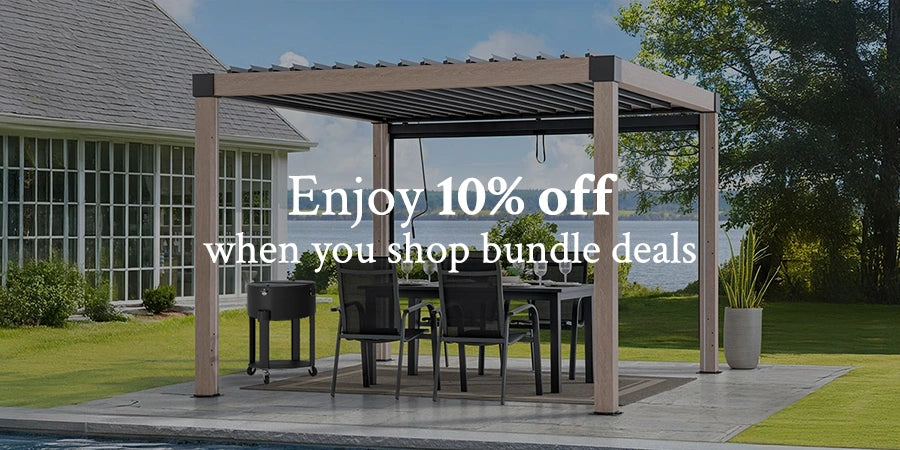
Recommended option: SUNJOY Aluminium Pergolas — built for year-round durability with modern aesthetics and optional solar lighting integration.
B. Responsibly Sourced Cedar Wood
Wood brings warmth and character to any garden, but sustainability depends on responsible sourcing.
Choose FSC-certified cedar wood, which ensures responsible forestry management.
Cedar is naturally resistant to rot and insects — reducing the need for harsh chemicals.
Over time, it weathers beautifully, blending seamlessly into natural surroundings.
Recommended option: SUNJOY Cedar Wood Gazebos — crafted from sustainably sourced wood with metal roofing for long-term resilience.
C. Recyclable Steel and Hybrid Designs
Modern eco-friendly garden structures often combine recycled steel frames with wood or aluminium elements, delivering both strength and style.
Ideal for gazebos, carports, and outdoor kitchens.
Powder-coated finishes extend lifespan and reduce repainting needs.
3. Embrace Solar-Powered Outdoor Accessories
One of the easiest ways to make your outdoor space more sustainable is through solar energy integration.
- Solar LED Lights: Provide efficient, zero-emission illumination for gazebos and pergolas.
- Solar-Powered Fire Pits or Spotlights: Reduce electricity consumption while maintaining ambience.
- Charging Panels: Keep portable cooling systems or lighting powered sustainably.
SUNJOY Example: The SUNJOY Matterhorn Louvered Pergola includes solar-powered LED lighting — offering eco-friendly illumination and creating a warm, inviting atmosphere without wiring.
4. Low-Maintenance = Eco-Friendly
Sustainability also means choosing designs that require fewer resources over time.
Select powder-coated aluminium to avoid frequent painting.
Opt for modular structures that can be easily repaired or upgraded.
Use drainage systems in pergolas to manage rainwater efficiently.
Less maintenance means fewer chemical cleaners, less water use, and reduced waste — key pillars of sustainable living.
5. Design Tips for an Eco-Conscious Outdoor Space
An eco-friendly garden structure works best when paired with a sustainable garden layout.
Try these design strategies:
Surround gazebos or pergolas with native plants that require less watering.
Use permeable paving or decking to improve drainage and reduce runoff.
Choose solar lanterns or battery-free lighting to maintain a low-energy footprint.
Incorporate rainwater barrels near garden structures for natural irrigation.
Pro Tip: A pergola with adjustable louvres or retractable canopy reduces the need for electric fans or heaters — maximising comfort naturally.
6. Long-Term Value of Sustainable Garden Structures
Investing in sustainable garden structures isn’t just good for the planet — it’s smart economics.
- Lower upkeep costs: Materials like aluminium and cedar require minimal care.
- Increased home value: Eco-conscious design appeals to modern buyers.
- Year-round functionality: Weather-resistant materials ensure longevity.
With rising energy costs and environmental awareness in the UK, eco-friendly outdoor living is both a lifestyle choice and a practical investment.
Conclusion: Build a Greener Garden with SUNJOY
Creating a sustainable outdoor living space starts with choosing the right materials and smart design. From aluminium pergolas that last for decades to solar-powered lighting that reduces your footprint, SUNJOY offers eco-friendly solutions for every garden style.
By combining timeless design, durable materials, and modern innovation, you can enjoy your garden guilt-free — knowing it’s built for both comfort and conservation.